

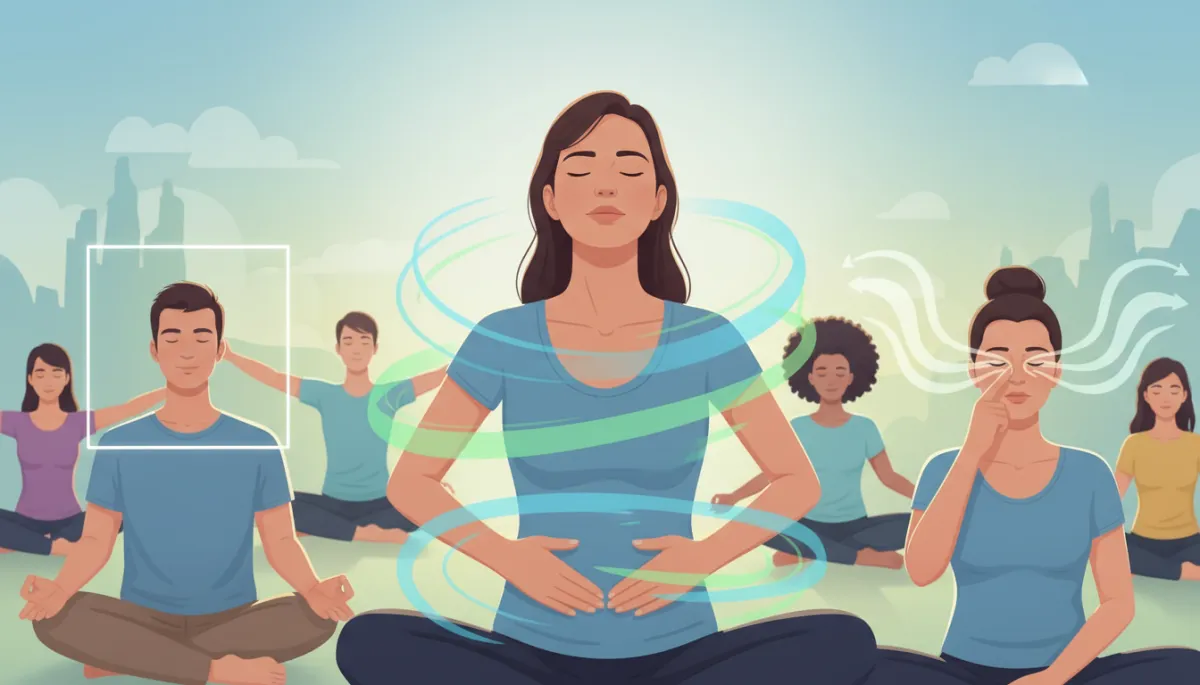
10 Breathing Exercises for Stress Relief
Wellness, Breathing Exercises, Stress Relief
10 Breathing Exercises for Instant Stress Relief (With Visual Guidance)
Breathing is the one tool for stress relief that is always with you, completely free, and instantly effective. In this guide, you will learn 10 simple, science-backed breathing exercises for instant stress relief, complete with clear descriptions and visual cues so you can follow along with confidence. With consistent practice, these techniques can become a powerful foundation for long-term mental and physical well-being.
Why Breathing Exercises Work So Quickly
When you are stressed, your body shifts into “fight or flight” mode: your heart races, your muscles tense, and your thoughts speed up. Conscious breathing flips the switch back toward the rest-and-digest response by stimulating the vagus nerve and signaling to your nervous system that you are safe. The result is often instant relief: slower heart rate, calmer thoughts, and a grounded, steady feeling in your body.
The exercises below are designed to be:
Simple — no equipment, no special clothing, no prior experience needed.
Fast-acting — most can be done in 1–3 minutes for quick stress relief.
Portable — practice at your desk, in your car (parked), or before sleep.
💡 Gentle Reminder: If you ever feel dizzy or lightheaded, pause, return to your normal breath, and sit or lie down until you feel steady again.
1. Diaphragmatic (Belly) Breathing: Your Foundational Technique
Diaphragmatic breathing, often called belly breathing, teaches you to use your diaphragm instead of shallow chest breathing. This fuller, slower breath is one of the quickest ways to calm your nervous system and is the foundation for many of the other techniques in this list.
How to Practice Belly Breathing
Sit comfortably or lie on your back with your knees bent. Relax your shoulders and jaw.
Place one hand on your chest and the other on your belly, just below your ribcage. This helps you feel the movement of your breath.
Inhale slowly through your nose for a count of 4, allowing your belly to gently rise under your hand while your chest stays relatively still.
Exhale slowly through your nose or softly through pursed lips for a count of 6, feeling your belly fall.
Repeat for 10–15 breaths, focusing on the gentle rise and fall of your abdomen.
Aim to practice belly breathing for a few minutes each morning and evening. Over time, it trains your body to breathe more deeply and calmly throughout the day, reducing your baseline stress level.
2. Box Breathing: A Simple Pattern to Reset Your Mind
Box breathing, also known as square breathing, uses equal counts for inhaling, holding, exhaling, and holding again. This rhythmic pattern is often used by athletes, performers, and even military personnel to stay calm under pressure and sharpen focus.
How to Practice Box Breathing
Sit upright with your feet on the floor and your spine tall but relaxed. Rest your hands on your thighs or in your lap.
Inhale gently through your nose for a count of 4, feeling your belly and ribs expand outward.
Hold your breath for a count of 4, keeping your body as relaxed as possible.
Exhale slowly through your nose for a count of 4, allowing your body to soften with the out-breath.
Hold again at the bottom of the exhale for a count of 4. This completes one “box.”
Visualize tracing the four equal sides of a square in your mind as you breathe: up the left side as you inhale, across the top as you hold, down the right side as you exhale, and along the bottom as you hold again. Repeat for 4–8 rounds whenever you need a mental reset, such as before a meeting or after receiving stressful news.
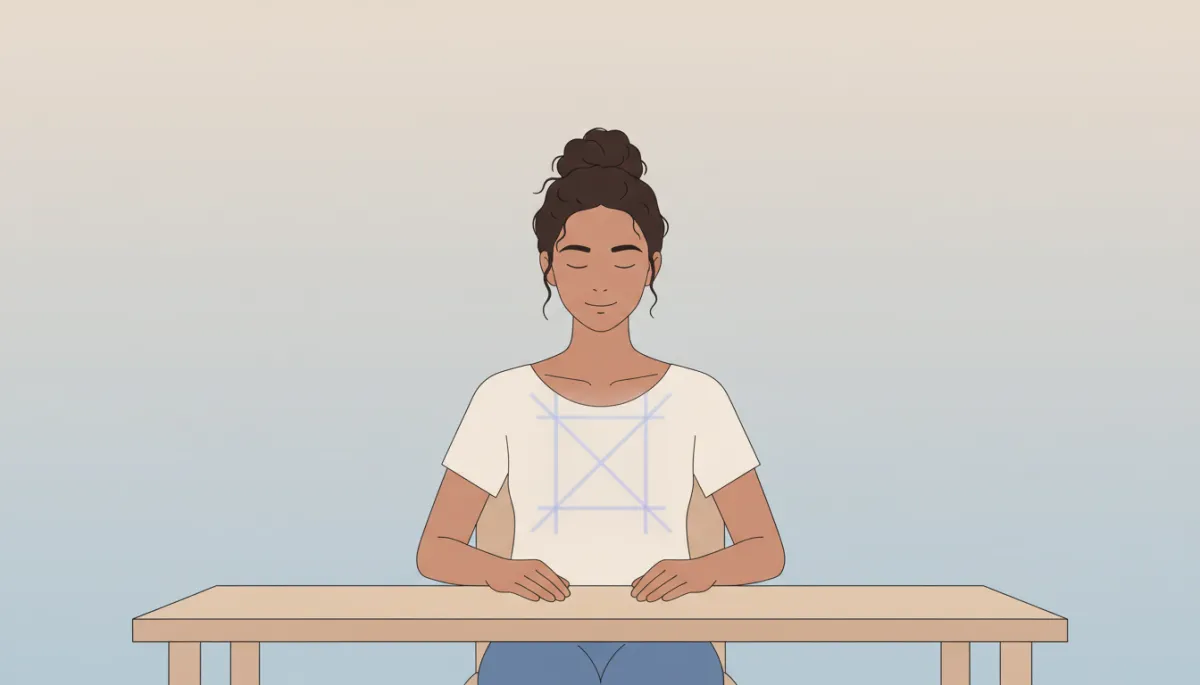
Box breathing offers a quick, structured way to pause, reset, and regain focus.
3. 4-7-8 Breathing: A Soothing Technique for Anxiety and Sleep
The 4-7-8 breathing method, popularized by Dr. Andrew Weil, is sometimes called a “natural tranquilizer for the nervous system.” The extended exhale encourages deep relaxation, making it especially helpful when you feel anxious or have trouble falling asleep.
How to Practice 4-7-8 Breathing
Sit or lie down comfortably with your back supported. Gently rest the tip of your tongue against the ridge behind your upper front teeth and keep it there throughout the exercise if comfortable.
Exhale completely through your mouth, making a soft “whoosh” sound to empty your lungs.
Close your mouth and inhale quietly through your nose for a count of 4.
Hold your breath gently for a count of 7, keeping your body relaxed and shoulders soft.
Exhale fully through your mouth with a “whoosh” for a count of 8, emptying your lungs slowly and steadily.
That is one breath cycle. Start with 4 cycles and gradually work up to 8 if it feels comfortable. Because of the longer breath-hold and exhale, this technique is best done while seated or lying down, especially at the end of the day or when you wake up during the night feeling restless.
4. Equal Breathing (Sama Vritti): Creating Inner Balance
Equal breathing, or Sama Vritti in yoga, uses the same count for the inhale and exhale. This creates a sense of symmetry and balance in your body and mind, making it ideal when you feel scattered or overwhelmed by too many tasks or thoughts.
How to Practice Equal Breathing
Sit comfortably with your spine tall, or lie down if that feels better. Gently close your eyes to reduce distractions if you like.
Inhale through your nose for a count of 4, feeling your ribs expand outward and your belly soften.
Exhale through your nose for a count of 4, gently drawing your navel toward your spine at the end of the breath.
Once this feels easy, you can gradually increase to a count of 5 or 6, as long as the breath remains smooth and comfortable. Continue for 3–5 minutes, letting the steady rhythm quiet your thoughts and steady your mood.
5. Extended Exhale Breathing: Turning Down the Stress Response
One of the fastest ways to calm your nervous system is to make your exhale longer than your inhale. The out-breath is closely linked to activation of the parasympathetic nervous system, which helps you relax, digest, and repair. Extended exhale breathing is especially helpful during moments of acute stress, such as after an argument or during a traffic jam.
How to Practice Extended Exhale Breathing
Sit or stand comfortably. Relax your shoulders, soften your jaw, and let your hands rest by your sides or on your lap.
Inhale gently through your nose for a count of 3 or 4, allowing your belly to rise slightly.
Exhale through your nose or softly pursed lips for a count of 6 or 7, letting the air leave slowly and steadily, as if you are gently blowing out a candle without flickering the flame.
Continue for 10–20 breaths. Notice if your shoulders drop, your jaw unclenches, or your heart rate slows. Use this technique discreetly in public or at work whenever you feel your stress level rising.
6. Alternate Nostril Breathing: Balancing Energy and Focus
Alternate nostril breathing, or Nadi Shodhana, is a traditional yogic technique believed to balance the left and right sides of the brain. Many people find it deeply centering, making it a wonderful practice before important conversations, creative work, or meditation.
How to Practice Alternate Nostril Breathing
Sit comfortably with your spine straight. Relax your left hand on your thigh. With your right hand, curl your index and middle fingers toward your palm, leaving your thumb and ring finger free (or use any comfortable variation).
Gently close your right nostril with your thumb and inhale slowly through your left nostril for a count of 4.
Close your left nostril with your ring finger so both nostrils are briefly closed. Pause for a count of 2 if comfortable.
Release your right nostril while keeping the left closed, and exhale through the right nostril for a count of 4.
Inhale through the right nostril for a count of 4, then close both nostrils briefly, and exhale through the left for a count of 4. This completes one full cycle.
Continue for 5–10 cycles, moving slowly and smoothly. If holding the breath feels uncomfortable at any time, skip the pauses and simply alternate the inhale and exhale between nostrils. This practice is best done in a quiet space where you can focus without interruption.
7. Resonant (Coherent) Breathing: Tuning Your Body to a Calming Rhythm
Resonant breathing, sometimes called coherent breathing, involves breathing at a rate of about 5–6 breaths per minute. Research suggests that this rhythm can help synchronize your heart, lungs, and nervous system, leading to a deep sense of calm and emotional stability.
How to Practice Resonant Breathing
Sit or lie down comfortably. If you like, set a gentle timer for 5–10 minutes so you can relax into the practice without checking the clock.
Inhale through your nose for a slow count of 5, allowing your belly and lower ribs to expand.
Exhale through your nose for a slow count of 5, feeling your body soften with the out-breath.
Continue breathing at this steady 5-in, 5-out pace. If you prefer, you can adjust to 4 or 6 counts per breath, as long as it feels smooth and effortless. This is an excellent daily practice for long-term stress resilience and emotional regulation.
8. The Physiological Sigh: A One-Minute Reset Button
The “physiological sigh” is a natural pattern your body uses to quickly reduce stress. You may notice yourself doing it spontaneously: a double inhale followed by a long exhale. Neuroscientist Dr. Andrew Huberman and others have highlighted its powerful effect on rapidly lowering anxiety and restoring calm.
How to Practice the Physiological Sigh
Inhale through your nose until your lungs feel about 80% full.
Without exhaling, take a second, shorter inhale through your nose to fully fill your lungs, especially the upper chest area.
Exhale slowly and completely through your mouth with a relaxed, open jaw, as if you are gently fogging up a mirror. Let your shoulders drop as you breathe out.
Repeat this double-inhale, long-exhale pattern 3–5 times. It usually takes less than a minute and can be especially effective when you feel a sudden spike of stress, such as right after an intense email or a difficult phone call.
9. Counting Breath: Anchoring a Busy Mind
Counting your breaths is a simple way to pair physical relaxation with mental focus. By giving your mind a gentle task—counting—you reduce the space available for spiraling thoughts and worries. This technique can be done anywhere and is especially useful when your mind feels noisy or restless.
How to Practice Counting Breath
Sit or lie down comfortably. Close your eyes if that feels safe and soothing.
Inhale naturally through your nose and silently count “one” in your mind as you complete the exhale. On the next exhale, count “two,” and so on, up to “ten.”
If you lose track or your mind wanders, gently bring your attention back and start again from “one” without judgment.
Continue for several rounds of ten breaths. Over time, this practice strengthens your ability to notice when your mind drifts and to gently guide it back—an essential skill for managing stress and staying present.
10. “Smell the Flower, Blow the Candle”: A Gentle Technique for All Ages
This simple, visual breathing exercise is often taught to children, but it works beautifully for adults too. The playful imagery makes it easy to remember in stressful moments and encourages a slow, deep inhale followed by a controlled, extended exhale.
How to Practice “Smell the Flower, Blow the Candle”
Imagine holding a fragrant flower in one hand and a small candle in the other. If you like, you can actually hold your hands up as if you are holding them to reinforce the visualization.
Inhale slowly through your nose as if you are smelling the flower, allowing your belly to expand and your chest to gently rise.
Exhale gently through pursed lips as if you are blowing out the candle, but try not to “blow it out” too quickly. Imagine you want the flame to flicker softly rather than go out in one strong puff.
Repeat for 10–20 breaths. This technique is especially helpful for easing tension after a stressful conversation, calming pre-presentation nerves, or winding down before bed. It is also a great tool to share with children or loved ones who may be feeling anxious.
How to Integrate These Breathing Exercises into Your Daily Routine
While each of these techniques can provide instant stress relief, their real power emerges when you weave them into your everyday life. Just like brushing your teeth keeps your mouth healthy, daily breathing practice keeps your nervous system more resilient and balanced over time.
Create Small, Consistent Rituals
Morning Reset: Start your day with 3–5 minutes of belly breathing or resonant breathing before you check your phone or email. This sets a calm tone for the day ahead.
Workday Pauses: Use box breathing or the physiological sigh between meetings, after challenging calls, or whenever you feel tension rising in your shoulders or jaw.
Evening Wind-Down: Practice 4-7-8 breathing, equal breathing, or counting breath in bed to transition from the busyness of the day into restful sleep.
Pair Breathing with Everyday Habits
The easiest way to build a new habit is to attach it to something you already do. Choose one or two of the breathing exercises that resonate with you and link them to daily activities:
Take five extended exhale breaths every time you sit down at your desk.
Practice alternate nostril breathing after you brush your teeth at night.
Use “smell the flower, blow the candle” while waiting for your coffee or tea to brew.
📌 Key Takeaway: Consistency matters more than perfection. Even a few mindful breaths, repeated often, can significantly lower your overall stress levels and support long-term mental and physical well-being.
Listen to Your Body and Adjust
Everyone’s body is different. Some days a longer breath-hold may feel great; other days, a simple equal breath or a few physiological sighs might be all you need. Pay attention to how each exercise feels:
If you feel dizzy, shorten the counts or return to your natural breath.
If a technique feels agitating rather than calming, try a different one or practice at another time of day.
If you have any respiratory or cardiovascular conditions, check in with your healthcare provider before starting new breathing exercises.
The Long-Term Benefits of a Daily Breathing Practice
While the title of this guide focuses on instant stress relief, it is important to recognize that these exercises are also a powerful investment in your long-term health. Regular conscious breathing practice has been associated with:
Reduced baseline anxiety and improved emotional resilience.
Better sleep quality and easier transitions into rest.
Lower blood pressure and heart rate over time in many individuals.
Increased focus, clarity, and creativity during the day.
Think of these 10 breathing exercises as a personalized toolkit. You might rely on box breathing during busy workdays, 4-7-8 breathing to fall asleep, the physiological sigh in moments of acute stress, and belly breathing as your everyday baseline. Over time, your body learns that it can return to calm more quickly, even when life feels demanding.
Bringing It All Together
You do not need to master all 10 breathing exercises at once. Start with one or two that feel intuitive and easy. Practice them for a week, then add another technique as you feel ready. The goal is not perfection; it is building a compassionate relationship with your breath so that, in moments of stress, you have reliable tools ready at hand.
With just a few minutes of practice each day, you can transform your breath into a powerful ally for both instant stress relief and long-term mental and physical well-being. Your breath is always with you—now you know how to use it.
*The techniques and suggestions shared here are intended for holistic wellness and educational purposes only and should not be considered medical advice. Please consult your physician or qualified healthcare provider for personalized medical guidance, diagnosis, or treatment.
