


Outdoor-Inspired Mindfulness: A Gentle Guide
Mindfulness, Guided Relaxation
A Gentle Guide to Outdoor-Inspired Mindfulness
This calm, step-by-step practice invites you to slow down, soften your thoughts, and reconnect with a sense of peaceful presence, whether you are outdoors or simply imagining a soothing natural scene from home.
1. Finding a View: Choosing Your Calm Anchor
Begin by gently choosing a view that feels soothing rather than exciting. This might be a stretch of sky through your window, a tree in the distance, the soft curve of a hill, or even a quiet corner of your room where light falls in a comforting way. Let this view become your anchor — a simple, steady point that invites your attention to settle and rest.
If you are indoors, you can place a chair near a window or sit on the floor, leaning against a wall. Allow your eyes to rest softly on one gentle detail: the outline of a leaf, the way the clouds move, or the pattern of light and shadow. There is nothing to analyze here, only something quiet to notice, slowly and kindly.
2. Setting the Atmosphere: Creating a Soft Space
Once you have your view, gently shape the atmosphere around you so your body feels safe and at ease. You might dim harsh lights, close a door, silence notifications, or wrap a light blanket around your shoulders. Choose a comfortable position where your body feels supported: feet on the floor, legs crossed on a cushion, or reclining slightly in a chair with your back resting fully.
Small details can help signal to your mind that this is a gentle moment. Perhaps you light a softly scented candle, place a favorite mug of tea nearby, or play the faintest hint of nature sounds. Let the space feel simple rather than perfect, welcoming rather than staged. The intention is comfort, not performance.
3. Focusing on Breath: Returning to a Natural Rhythm
When your space feels settled, gently turn your attention toward your breath. There is no need to change it right away. Simply notice how it is moving now: the coolness as you breathe in, the warmth as you breathe out, the quiet rise and fall of your chest or belly. Allow your breath to be exactly as it is, meeting it with patience and curiosity.
If it feels comfortable, you can soften and lengthen each exhale, as though you are slowly sighing tension out of your body. Perhaps you count to four on the in-breath and to six on the out-breath, letting each exhale melt your shoulders a little more. When your mind wanders, as it naturally will, gently guide it back to this steady, kind rhythm of breathing, like waves arriving and retreating on a quiet shore.
4. Engaging with Nature: Sensing the World Around You
As your breath settles, gently widen your awareness to include the natural world around you. If you are outdoors, notice the texture of the ground beneath your feet, the temperature of the air on your skin, and the subtle sounds of birds, wind, or rustling leaves. If you are indoors, see how nature still reaches you: the way daylight shifts on the wall, a plant on your shelf, or the faint sound of rain or distant traffic passing under the sky.
Let your senses explore gently. Notice one sound at a time, one scent, one sensation. There is no need to label or judge; simply allow nature to be present with you, like a quiet, steady companion. In this shared stillness, you may feel a soft sense of belonging, as if the world is holding you with calm and open hands.
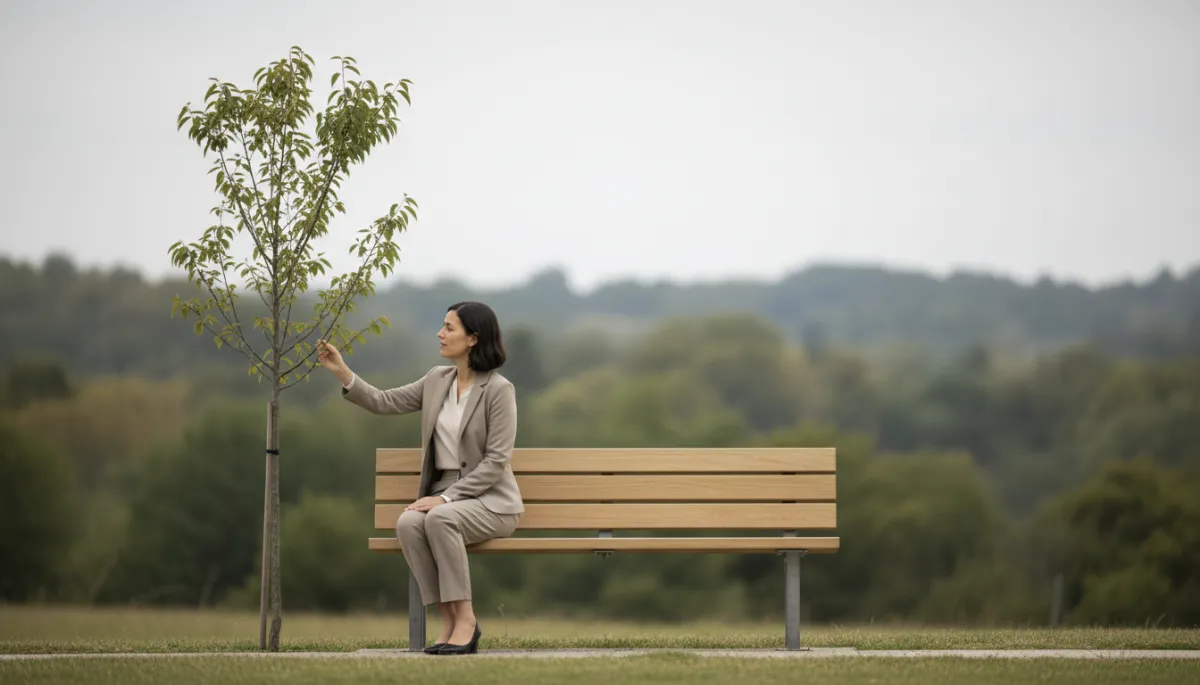
Simple contact with nature can quietly steady the nervous system and mind.
5. Visualizing Outdoors: Bringing Nature to Your Inner Landscape
Even when you cannot physically step outside, you can gently invite an outdoor scene into your imagination. With your eyes closed or softly lowered, picture a place that feels peaceful to you: a quiet forest path, a sunlit meadow, a calm lakeshore, or a simple garden bench. Let this place be familiar or entirely imagined; what matters is how it feels in your body — safe, spacious, and kind.
Notice the colors in this inner landscape, the way light touches the ground, the sounds that drift through the air. Imagine the gentle weight of your body resting there, supported by the earth beneath you. With each breath, allow yourself to feel as though you are truly present in this peaceful setting, breathing in its calm and breathing out any tightness or strain.
6. Practicing Gratitude: Closing with a Gentle Thank You
As your practice comes to a close, take a few quiet moments to rest in gratitude. There is no need for grand gestures; instead, notice the small, steady blessings that are here with you. You might feel grateful for your breath, for the view that held your gaze, for the warmth of your clothing, or for the simple fact that you carved out this time to care for yourself.
Silently offer a soft “thank you” — to your body for carrying you, to nature for its quiet companionship, and to yourself for showing up with kindness. Let this gentle gratitude settle in your chest like a warm light. When you are ready, slowly open your eyes, stretch if you wish, and carry this feeling of calm appreciation with you into the rest of your day, knowing you can return to this practice whenever you need a moment of steady, grounded peace.
*The techniques and suggestions shared here are intended for holistic wellness and educational purposes only and should not be considered medical advice. Please consult your physician or qualified healthcare provider for personalized medical guidance, diagnosis, or treatment.
